
Property Market Predictions 2026: What London Sellers Should Know

If 2025 felt uncertain, 2026 is shaping up to be cautiously optimistic, but that optimism comes with significant variables. For London sellers, understanding what the year ahead might hold is essential to pricing strategy, timing decisions, and preparation.
The consensus among property forecasters is clear on one point: the market is moving in a positive direction.
Interest rates are falling.
Mortgage affordability is improving.
A backlog of postponed moves is likely to create increased activity. But here's the critical caveat: much depends on government policy decisions that haven't been finalised yet.

This article breaks down what we know about property market predictions 2026 with varying confidence levels, explores how buyer behaviour is shifting, and explains why presentation through strategic staging has become more important than ever for London sellers competing in an increasingly competitive market.
What Property Market Predictions 2026 Show
Property market predictions 2026 from leading institutions offer a range, and understanding that range helps you picture the landscape.
The consensus range: 2% to 5% annual growth.
Here's where different forecasters land:
Higher-confidence forecasts: Capital Economics projects 5% growth, based on the assumption that Bank Rate will fall from 4.25% to 3.00%, supporting mortgage affordability improvements. Savills forecasts 4%, anticipating wage growth of 22% over the five-year period combined with a strengthening economy post-2027. Both assume relatively benign policy outcomes.
Medium-confidence forecasts: Knight Frank projects 3%, acknowledging that affordability constraints, particularly tight in London, will temper growth. This is a more conservative view reflecting regional variation. The Office for Budget Responsibility (OBR) projects roughly 2.5%, taking a cautious stance toward economic growth and policy uncertainty.
What to take from this range: If you're a seller, the most likely scenario is single-digit growth somewhere between 2% and 4%. This isn't the explosive market of the early 2020s, but it's meaningfully better than the stagnation of 2024 and 2025. More importantly, a gently rising market typically favours well-prepared, competitively priced homes far more than it favours poorly presented ones.
Confidence level on these forecasts: Medium-High overall, with important caveats. The confidence drops significantly if government policy creates adverse tax impacts on high-value property sales.
The Budget Wildcard: Why Uncertainty Matters
Here's where we need to be direct: much of the 2026 outlook hinges on decisions still to be made.
Speculation around the Autumn Budget has created a cautious market environment. Rumoured potential changes include reforms to:
Capital Gains Tax (particularly relevant for second-home owners and investors),
possible adjustments to Inheritance Tax, and
unconfirmed discussions around property taxation reforms.
The impact is measurable. Recent data shows that demand for properties priced above £500,000 has fallen by approximately 9% as high-value buyers pause pending clarity. Prime central London prices have fallen for three consecutive quarters. This isn't necessarily a sign of market weakness; it's a sign of decision-postponement.
The critical insight: Uncertainty is worse than outcomes. Even if tax changes are introduced, the clarification itself will likely unlock postponed demand. Buyers and sellers who have been waiting for certainty will act once they have it, typically creating a surge in activity in early 2026.
Confidence level: Very High on the impact of uncertainty. Confidence on whether specific tax changes will materialise: Low-Medium. This is a policy call, not a market fundamental.
London's Specific Outlook: Modest Recovery Expected
London has significantly underperformed other UK regions over recent years. Prices in prime central London are roughly 22.4% below their 2014 peak, a stark contrast to growth in Northern regions.
The good news for London sellers: this underperformance may be creating a rebound opportunity. Market analysts expect London to stabilise and gradually recover in 2026, with property prices in prime areas expected to rise between 3% and 5%. This recovery is being driven by falling interest rates, improved buyer confidence, and increased housing supply creating a more balanced market.
However, and this matters, London is still forecast to underperform the national average. Knight Frank projects 3% growth for London versus 4% nationally. Why? Affordability constraints remain tightest in the capital. A property priced at £750,000 in London requires substantially higher household income to service than a £750,000 property in the South West or Midlands.
For prime central London specifically: Expect measured growth and stabilisation rather than dramatic appreciation. The market is moving from distressed to balanced, which is healthy but not exciting. This is precisely the environment where strategic presentation and competitive positioning matter most, because price appreciation alone won't drive sales.
Confidence level: Medium. These forecasts assume mortgage rates continue falling and policy doesn't create significant headwinds. Both are likely but not guaranteed.
Buyer Behaviour in 2026: What's Changing
Understanding how buyers are approaching the 2026 market is critical for sellers.
Current sentiment (as of late 2025): Cautious. Buyer enquiries fell 24% in October, the weakest reading since April, according to the Royal Institution of Chartered Surveyors (RICS). Agreed sales are also down 24%. This isn't weakness; it's hesitation ahead of policy clarity.
What we expect post-clarity: A significant rebound. Analysts refer to "pent-up demand" which means buyers who postponed decisions waiting for certainty. Once the Budget outcome is clear (likely early 2026), these buyers will re-engage. This creates an opportunity for well-prepared sellers.
Changing buyer priorities: Across London, Hertfordshire, and Essex, we're seeing buyers prioritise:

Authentic presentation over generic staging. Buyers now want to envision their lives in properties, not view showroom perfection. Character, personality, and genuine comfort appeal more than cold minimalism.
Quality and sustainability. Eco-friendly materials, natural finishes, and durable construction are expected, not optional. Properties with poor EPC ratings face significant headwinds.
Negotiating power. Average asking price reductions are running 8-9% from initial ask. This isn't desperation; it's a healthy market adjustment. Sellers who price realistically from the start avoid repeated markdowns.
Emotional connection. Buyers are looking for homes that feel intentional and cared for. Strategic staging that emphasises character, warmth, and lived-in comfort outperforms minimalist, corporate approaches.
Confidence level: Very High on buyer sentiment data. Confidence on post-Budget activity surge: Medium-High, assuming policy doesn't create major shocks.
How Staging Impacts Sale Speed and Price in 2026
This is where the rubber meets the road for London sellers: presentation directly affects outcomes.
In a gently rising market with abundant supply, well-presented, strategically staged properties sell faster and achieve higher prices. The data consistently shows this. Properties that showcase authentic character, layered design, and quality materials command premium positioning relative to comparable unstaged properties.
For London specifically, where buyer competition remains intense and affordability constraints keep prices elevated, staging becomes increasingly valuable. A £1.2 million property that appears tired, dated, or impersonal will struggle. The same property, professionally staged to showcase original features, updated systems, and contemporary comfort, will generate significantly more enquiries and higher offers.
Why staging matters more in 2026 than it did in 2023:
First, buyers are more sophisticated about what they're looking at.
Professional photography and virtual tours mean buyers expect high-quality presentation. A mediocre property showing will simply be skipped.
Second, supply has increased, giving buyers choice. This means properties must differentiate through presentation.
Third, the design trends shifting toward warmth, texture, and intentionality favour strategic staging. Generic, safe staging no longer works as well. Buyers want to see thoughtfully curated spaces, not empty rooms.
ROI on staging: Conservative estimates suggest professional staging increases sale price by 5-10% in London and the South East. For a £800,000 property, that's £40,000 to £80,000 additional value. Staging investment typically runs £4,000 to £10,000 depending on scope.
The return is substantial.
Confidence level: Very High. This is supported by consistent data across estate agents and staging professionals.
Preparing Your London Home for 2026: The Practical Steps
If you're planning to sell in 2026, here's what the forecast suggests you should focus on:
Price strategically from the start. Avoid the trap of over-pricing and hoping. The market has shifted toward buyer-friendly positioning. Price realistically based on comparable evidence, and you'll attract multiple enquiries. Over-price, and you'll face months of repeated markdowns.
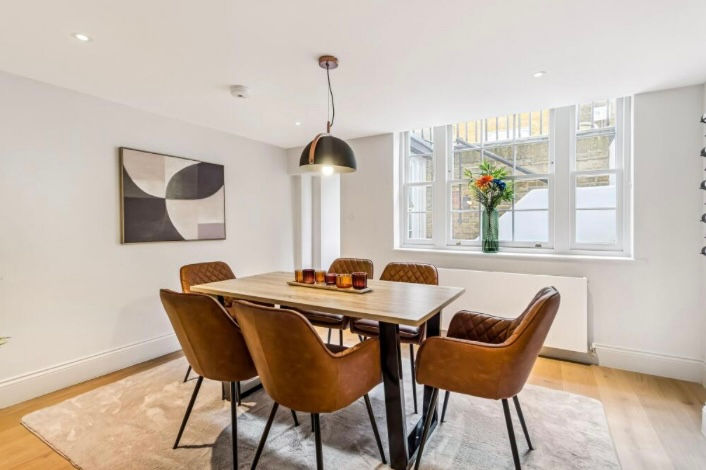
Invest in presentation. Professional staging, high-quality photography, and intentional design decisions will differentiate your property from competition. In a market where price growth is measured, presentation drives urgency and offer quality.
Emphasise authentic character. If your property has period features (original fireplaces, cornicing, hardwood floors), restore and showcase them. Modern heritage design is trending; buyers want to see history preserved and celebrated, not covered up.
Upgrade visible systems. EPC ratings matter increasingly. Modern heating, updated electrics, and improved insulation are competitive advantages. Buyers notice and value these upgrades.
Create emotional connection. Through photography, staging, and virtual presentation, help buyers envision their lives in the property. This isn't about tricks; it's about authentic storytelling.
Time your listing strategically. Post-Budget clarity (expected early 2026) will likely bring increased activity. If you can stage and list in early 2026 after market hesitation clears, you'll benefit from renewed buyer confidence.
The Bottom Line: Cautious Optimism with Action Required
Property market predictions 2026 point toward a recovery which is modest, measured, but meaningful. Price growth is expected in the 2-5% range. London will see modest appreciation in prime areas, with falling interest rates supporting buyer affordability. A significant backlog of postponed moves will likely create increased activity.
But this isn't a seller's market. It's a balanced market that rewards preparation, realistic pricing, and strategic presentation. The properties that sell fastest and achieve highest prices in 2026 will be those that genuinely appeal to buyers, through authentic character, quality presentation, and thoughtful design.
If you're a London seller, the message is clear: prepare your property now. Invest in professional staging and presentation. Price realistically. And time your listing to capture momentum in early 2026 when pent-up demand returns to the market.
Ready to prepare your property for the 2026 market? Our London home staging specialists have deep experience positioning properties for optimal sale outcomes.
Contact us to discuss a tailored staging strategy that aligns with current buyer expectations and market dynamics.

Key Sources
Royal Institution of Chartered Surveyors (RICS). (2025). Buyer Enquiries and Agreed Sales Data, October 2025. https://www.rics.org/
Capital Economics. (2025). UK Housing Outlook: House prices to beat expectations in 2026. https://www.capitaleconomics.com/publications/uk-housing-market-outlook/uk-housing-outlook-house-prices-beat-expectations-2026
Savills. (2025). Revised Mainstream House Price Forecasts: 2025 to 2029. https://www.savills.co.uk/research_articles/229130/379365-0
Knight Frank. (2025). UK Housing Market Forecast: September 2025 - London. https://www.knightfrank.co.uk/research/article/2025/9/uk-housing-market-forecast-september-2025
Fox Davidson. (2025). Prime Central London Property Market Forecast 2026. https://www.foxdavidson.co.uk/2025/08/13/prime-central-london-property-market-forecast-2026-trends-insights/
MoneyWeek. (2025). What's happening with UK house prices? Latest property market moves and forecasts. https://moneyweek.com/investments/house-prices/house-prices
CityRise. (2025). Property Market Predictions 2026. https://www.cityrise.co.uk/property-market-predictions-2026/
Muscatt Black Graf LLP. (2025). Growth Expected in Prime Central London Market. https://muscattblackgraf.com/growth-expected-in-prime-central-london-market/


Really informative insights for anyone considering selling in London. The predictions feel grounded and realistic.